






Linear Stepper Motor Working Principle
A linear stepper motor is a pulse-driven electromagnetic actuator. Its job is straightforward: convert a sequence of electrical commands into incremental linear travel. It does not run from a power source by itself in any useful way. It needs a driver to regulate phase current, and it needs a controller to define when that current is switched and in what order.
From a system point of view, three parts matter:
The controller, which generates step commands and direction logic, or an equivalent motion command;
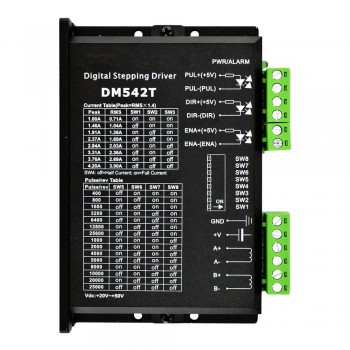
The driver, which applies controlled current to the motor phases;
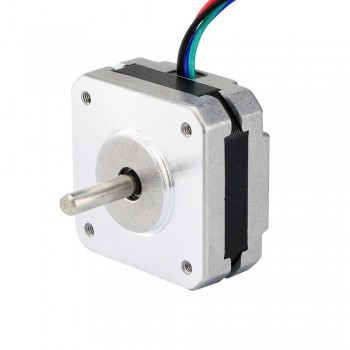
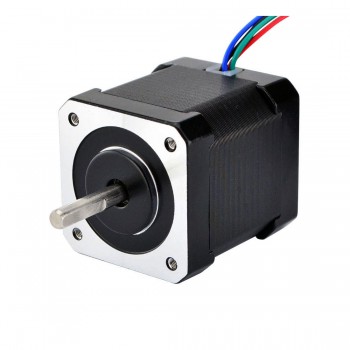
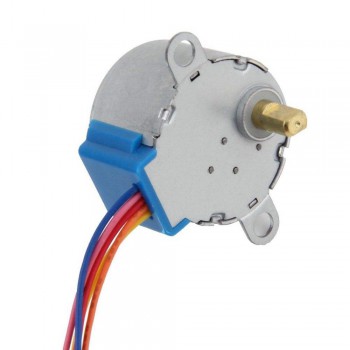
The motor, which converts that controlled magnetic sequence into linear displacement;
When the driver energizes the phases in sequence, the magnetic field shifts from one position to the next. The moving element follows that shift and advances by one increment at a time. That increment is set by the motor geometry and the drive mode. If microstepping is used, the commanded increment is divided further by the driver.
The pulse rate sets the commanded stepping rate. Raise the pulse rate, and the commanded travel rate rises with it. That relationship is simple on paper, but real machines do not run on theory alone. Actual motion depends on load, moving mass, friction, alignment, supply voltage, current setting, winding inductance, and the way the driver controls current. Those factors decide whether the motor follows the command cleanly or starts to fall behind.
This is where many motion problems begin. A linear stepper motor can only produce motion within the force and speed range available under the selected electrical and mechanical conditions. If the commanded pulse rate rises faster than the motor-load system can respond, the magnetic field advances before the mover has settled into the next position. Once that happens, the motor may lose synchronism. In practice, that shows up as missed steps, position error, or stall.
For that reason, stepper systems are usually not driven from zero directly to a high pulse rate. The normal approach is to use an acceleration ramp at startup and a deceleration ramp before stopping. That gives the motor time to build speed while staying within the pull-in and running limits of the system. The controller is not doing anything mysterious here; it is simply matching the command rate to what the motor, driver, and load can actually support.
Back electromotive effects also become more relevant as speed rises. As stepping rate increases, current has less time to build in each phase winding. Available force then changes with speed, driver voltage, current regulation method, and winding characteristics. This is one reason a motor that holds position correctly at low speed may not behave the same way at a much higher command rate.
In engineering use, a linear stepper motor should be treated as one part of a motion system, not as a standalone component with fixed behavior under all conditions. The final result comes from the combination of motor design, driver capability, control method, supply conditions, moving load, and mechanical installation. Change one of those, and the operating boundary moves with it.
For documentation or product listing, the technical description should state the actual configuration being supplied. That normally includes whether the product is the motor only or a motor-and-driver assembly, the rated current, supply range where applicable, step increment or travel resolution, usable stroke, drive mode, and whether the controller is included or supplied separately.
Previous:Stepper Motor Sizing and NEMA Standards List
Next:The working principle of linear actuator stepping motor
