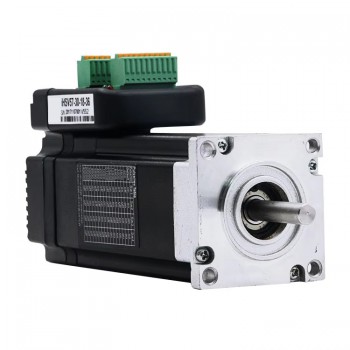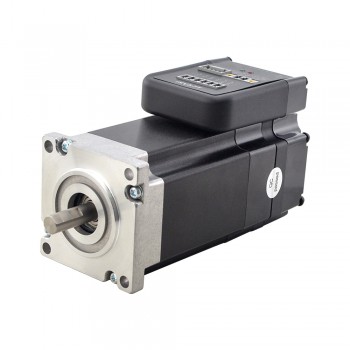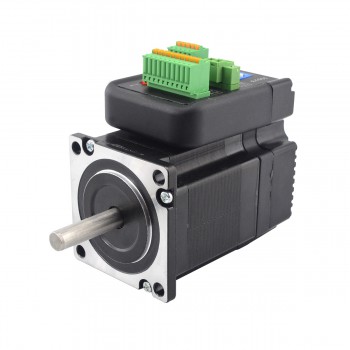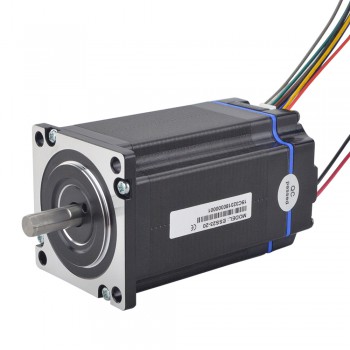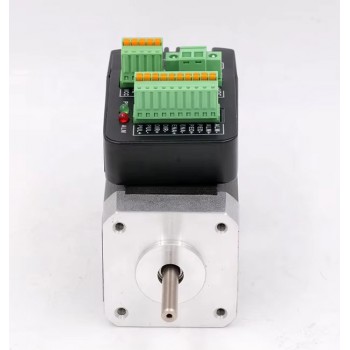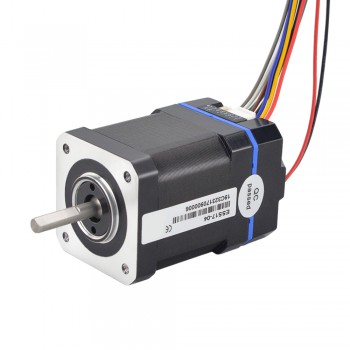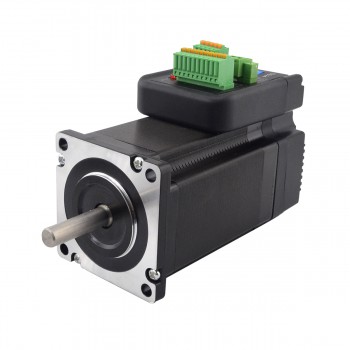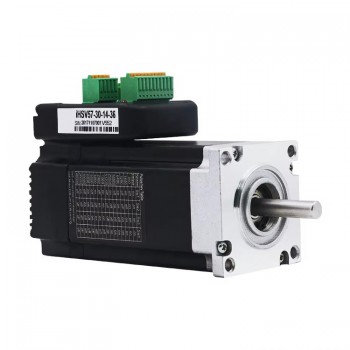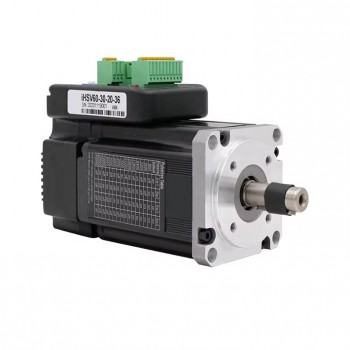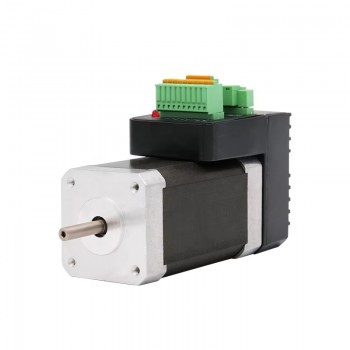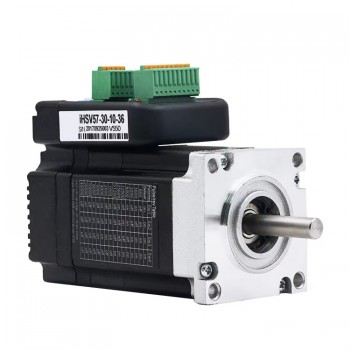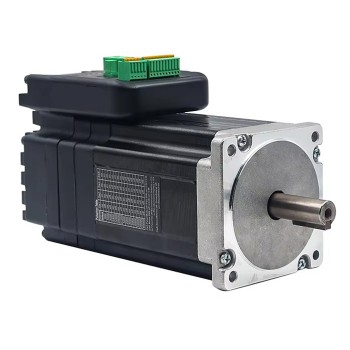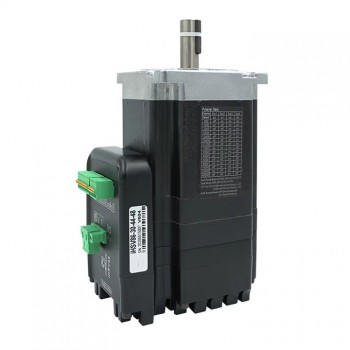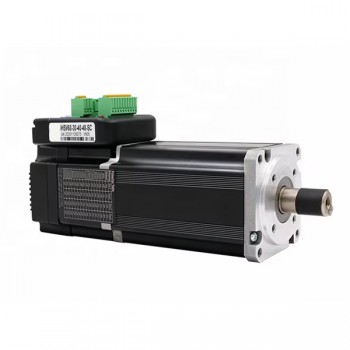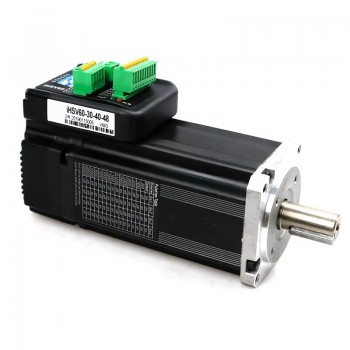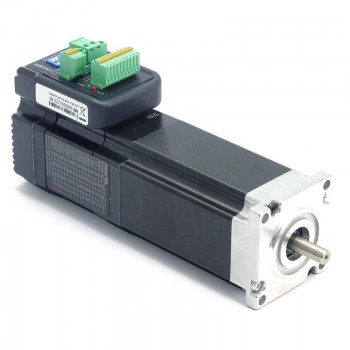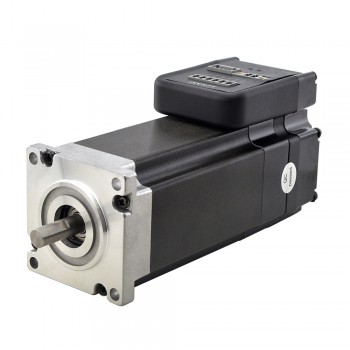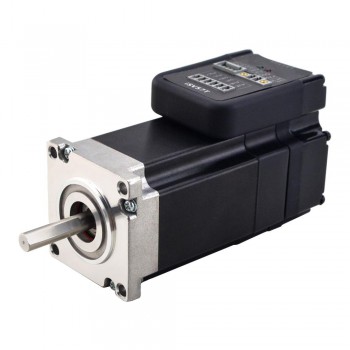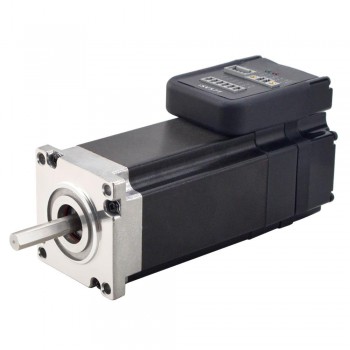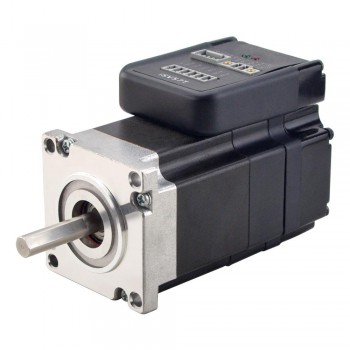





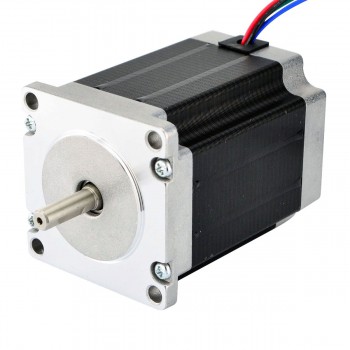
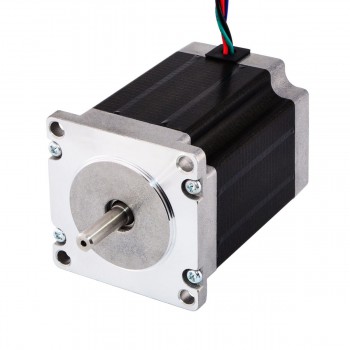
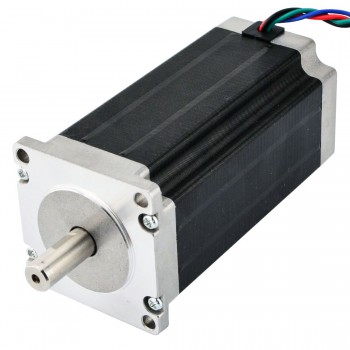
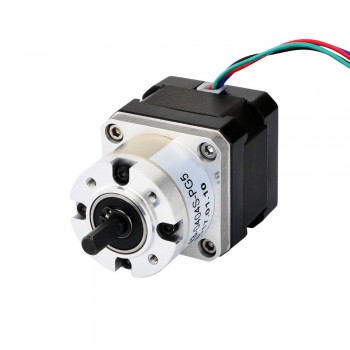
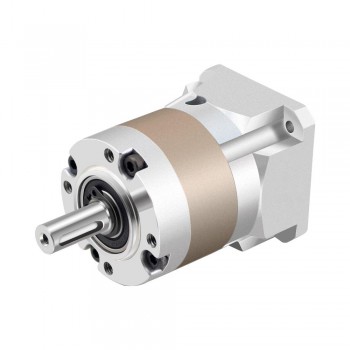
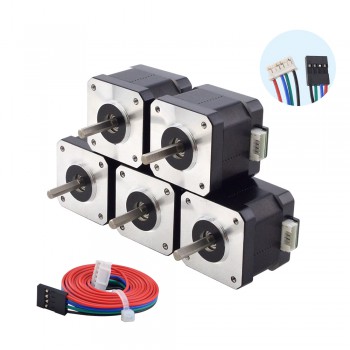

Integrated Servo Motor
Integrated servo motors combine the motor, feedback device, and drive electronics in one assembly—no separate drive mounting, interconnecting motor cables, or external encoder wiring required. This configuration is often selected in machine designs where panel space is limited or where simplified wiring is preferred.
Available communication options vary by product series and may include industrial Ethernet or fieldbus interfaces such as EtherCAT, CANopen, or Modbus. Signal types and supported protocols should be confirmed in the specifications for the selected model.
Performance and Configuration
Within the integrated housing, encoder feedback is used by the internal drive circuitry to regulate current, speed, and position during operation. Depending on the model, command input may be provided through pulse/direction signals, analog reference inputs, or supported communication networks.
When selecting a integrated servo motor, compare required torque and speed values against the manufacturer's published performance curves rather than relying solely on rated output values. Additional considerations typically include:
- Encoder type (incremental or absolute)
- Power supply requirements (input voltage and current range)
- Mounting interface (flange size, bolt pattern, shaft configuration)
- Environmental protection rating where applicable
- Optional holding brake availability
Mechanical compatibility and electrical ratings should be verified before installation.
Application Examples
Integrated servo motors are commonly implemented in positioning systems such as rotary indexing tables, gantry axes, automated feeders, labeling mechanisms, inspection platforms, and laboratory or industrial test equipment. Suitability depends on load inertia, acceleration requirements, duty cycle, and operating environment.