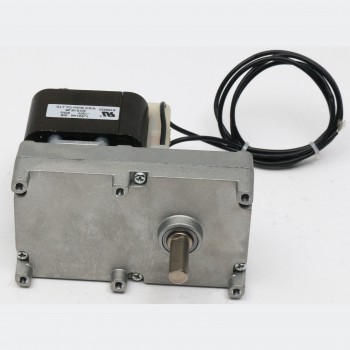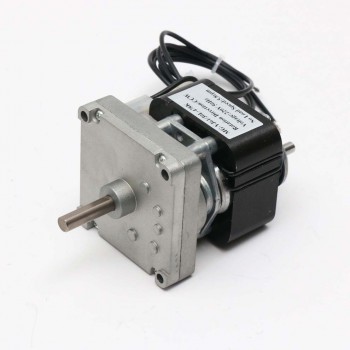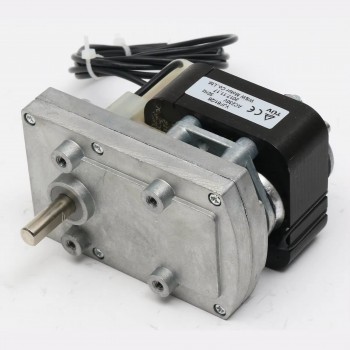







Shaded Pole Motor
If you've ever opened up a small fan or a kitchen timer, you may have seen a shaded pole motor. The design uses no capacitor and no separate start switch. A copper shading ring creates a small phase shift in part of the stator pole, which helps the rotor start turning.
Shaded pole motors are commonly used for light-duty, continuous rotation tasks—small cooling fans in electronics, vent hood fans, microwave turntables, and timing mechanisms. Starting torque is typically limited, so they are usually specified where the load is low and the speed requirement is modest. Noise and vibration depend on the fan blade, mounting method, and airflow conditions, not only on the motor itself.
When selecting a shaded pole motor, check the mounting style and frame size, supply voltage (often 120 V or 240 V), power rating (watts), target speed, and the driven load. Service life and performance depend on temperature, duty cycle, and installation conditions, so matching the motor rating to the application is a common way to reduce early failure risk.