






Industrial Applications of NEMA 42 Stepper Motor
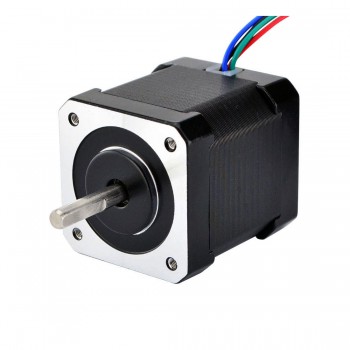
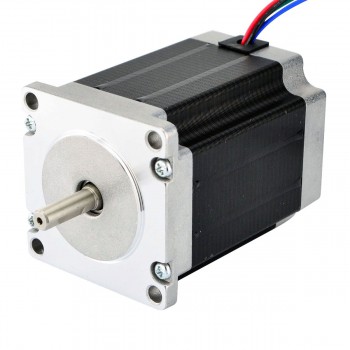
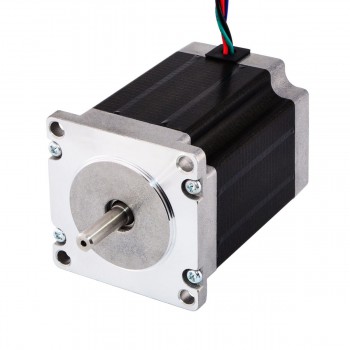
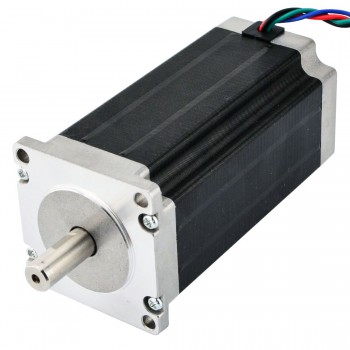
A NEMA 42 stepper motor is a stepper motor built to the NEMA 42 frame size standard, which defines the mounting face dimensions and bolt pattern. The motor converts electrical command signals into incremental shaft rotation. When a stepper driver energizes the windings in a defined sequence, the rotor advances in discrete angular steps. Speed is determined by the command pulse rate, and direction is determined by the direction command or the phase sequence applied by the driver.
Operating principle
The motor is driven by a stepper driver that regulates current through the windings in sequence.
A controller provides step and direction commands, or an equivalent command format supported by the driver.
Each command pulse corresponds to one step or microstep, depending on driver settings.
The system operates open-loop unless feedback hardware and a compatible control method are added at the system level.
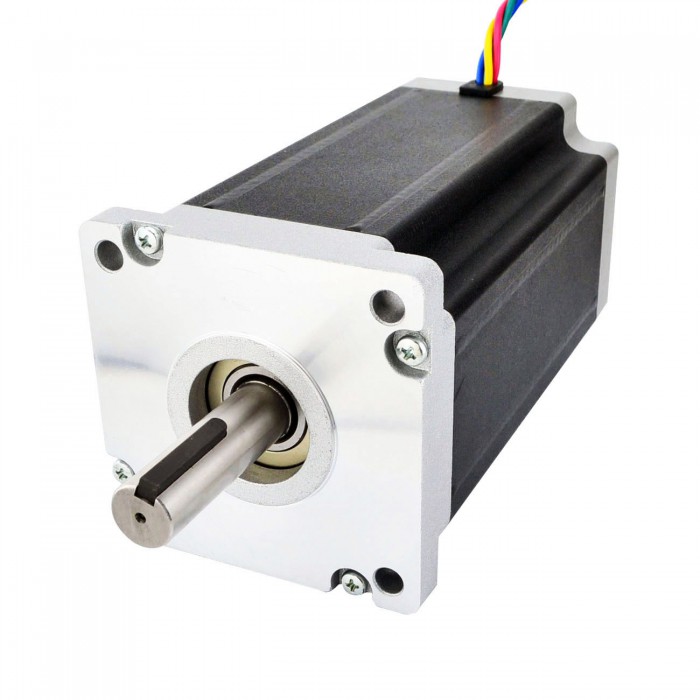
System components required for operation:
A typical configuration includes:
Motion controller that outputs step and direction commands
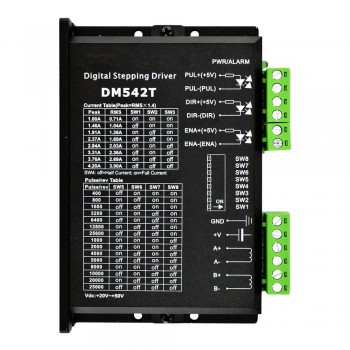
Stepper driver rated for the motor phase current and supply voltage
Power supply matched to the driver requirements
Mechanical coupling and mounting hardware required by the application
Package contents should be stated at the point of sale to distinguish the motor from external drivers, controllers, and power supplies.
Integration uses
Robotics mechanisms
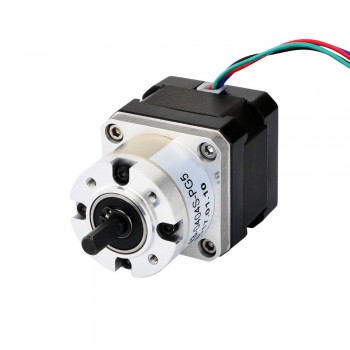
Used in robotic joints, positioning assemblies, and motion modules where a stepper-driven axis is implemented within the machine structure. Integration depends on torque demand, inertia, gearing, duty cycle, and thermal conditions of the motor and driver.
CNC equipment axes
Used in CNC motion axes with couplers, pulleys, gear reduction, belt drives, or screw drives. Axis behavior depends on transmission ratio, acceleration settings, driver current limit, supply voltage, and load conditions.
Additive manufacturing and prototyping equipment
Used in motion stages and handling subsystems where a stepper-driven rotary axis or a screw-driven linear axis is implemented. Motor selection depends on mechanical load, required speed range, and driver and controller configuration.
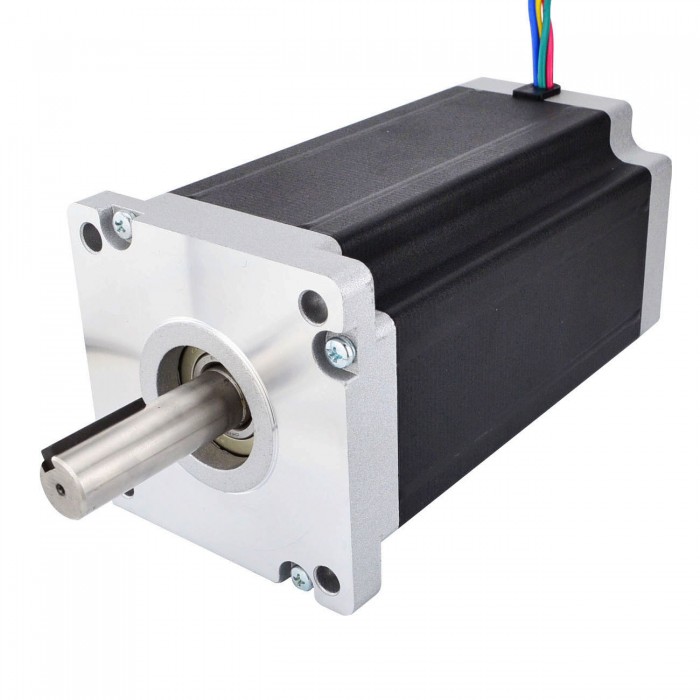
Listing information fields
For listing accuracy, provide:
Frame size: NEMA 42
Step angle: state the value from the motor specification
Rated phase current: state the value from the motor specification
Wiring configuration: 4-wire, 6-wire, or 8-wire, based on the motor lead count
Torque rating: state the value and the test condition used by the manufacturer
Shaft dimensions: diameter, length, and keyway type if applicable
Mounting dimensions: per the NEMA 42 frame standard
Driver and controller requirement: external unless included, and inclusion should be stated explicitly
Notes to prevent misinterpretation
NEMA 42 specifies mechanical frame size; electrical ratings vary by model.
A stepper motor requires a stepper driver for operation; controllers and power supplies are separate unless listed as included.
Output speed and available torque depend on load, mechanical transmission, driver settings, and supply conditions.
Next:The difference Bettween 1-phase, 2-phase and 3-phase Motor
