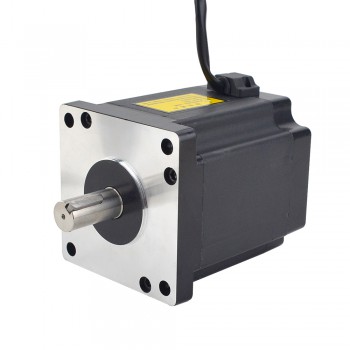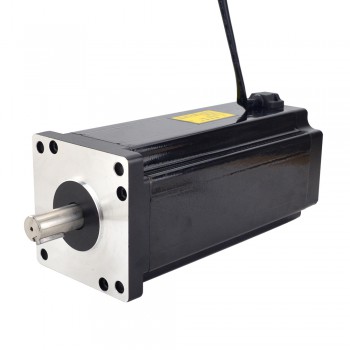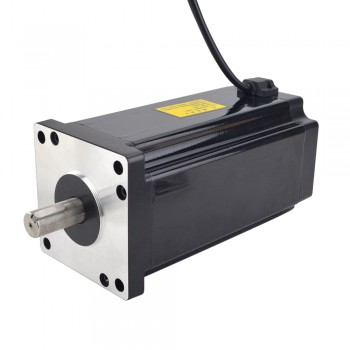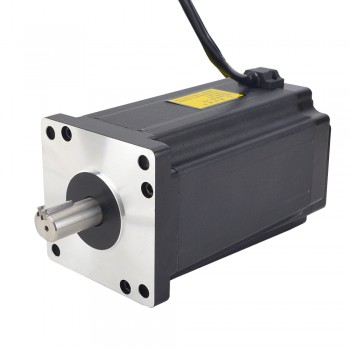






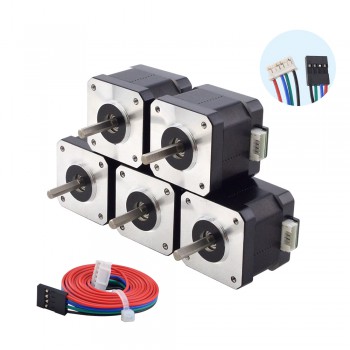

Nema 42 Stepper Motor
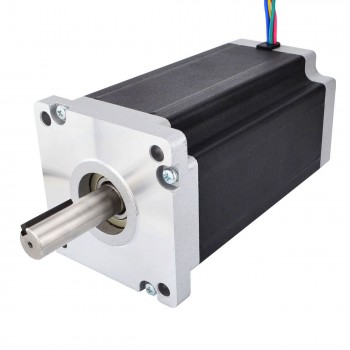
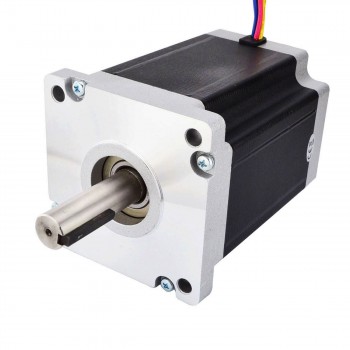
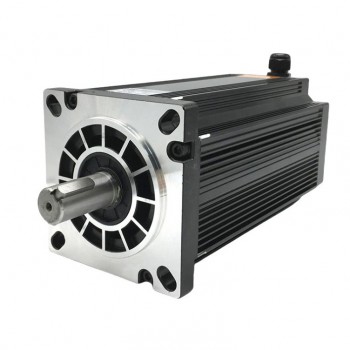
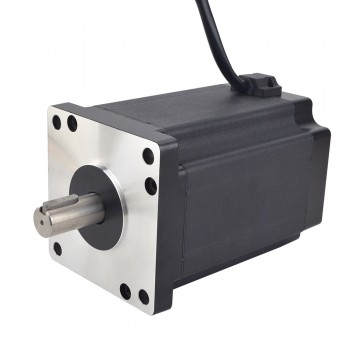
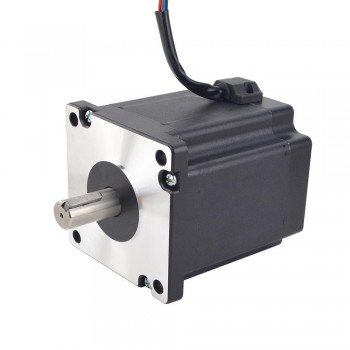
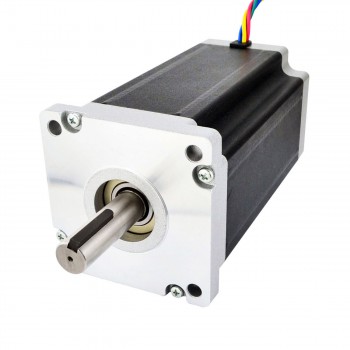
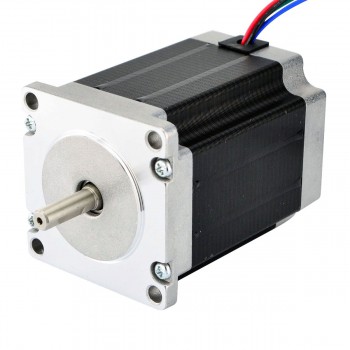
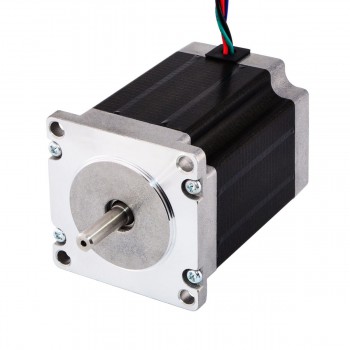
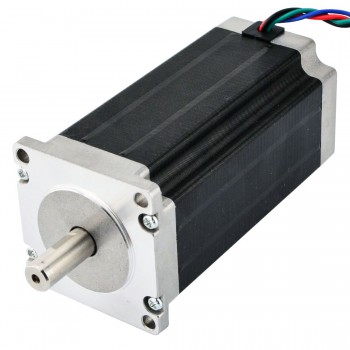
The NEMA 42 designation refers to the mechanical mount size—roughly a 110 × 110 mm square face (nominal). It does not define the electrical ratings. Many NEMA 42 stepper motors use a hybrid construction (PM rotor with a VR-style toothed stator). A common full-step angle is 1.8° (200 full steps per revolution), while the commanded resolution can be increased by microstepping at the drive.
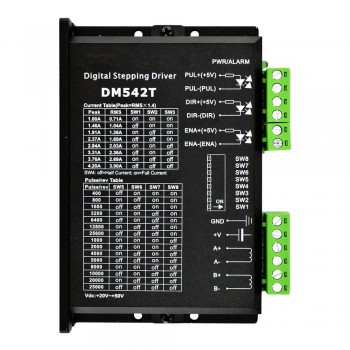
What separates one NEMA 42 from another is usually stack length, winding choice, and thermal design. Those details influence holding torque, usable torque at speed, current draw, and how much heat the motor must shed during the duty cycle. For selection, treat the torque–speed curve as the primary reference: confirm torque at your real operating RPM and acceleration profile, then verify phase current, inductance/resistance, and the driver supply limits for the exact part number.
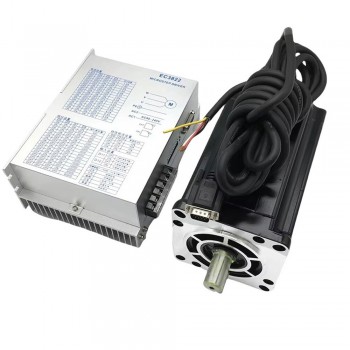
NEMA 42 motors are commonly specified where the mechanical assembly has higher inertia or requires higher low-speed torque—examples include larger CNC axes, heavy positioning stages, and industrial handling mechanisms. Open-loop control is often used, but whether feedback is needed depends on the margin between available torque and the load, along with the risk of missed steps under transients. Final fit should be checked using the mounting pattern, shaft dimensions, allowable radial/axial loads, and the installation environment (temperature, dust, ventilation) listed in the manufacturer's documentation.