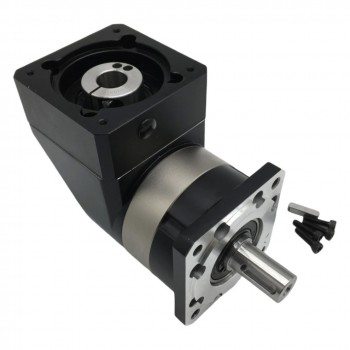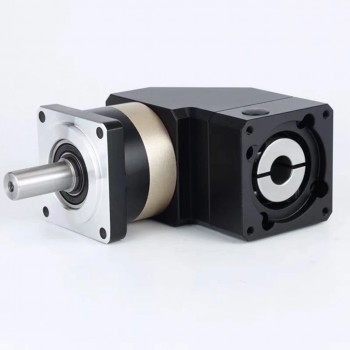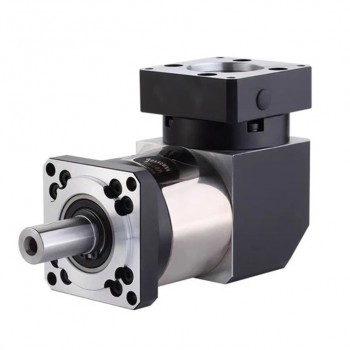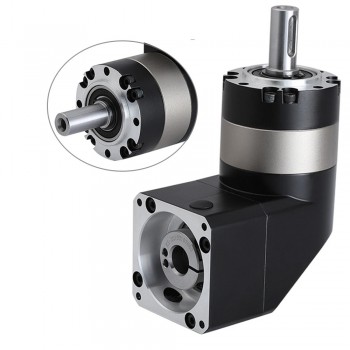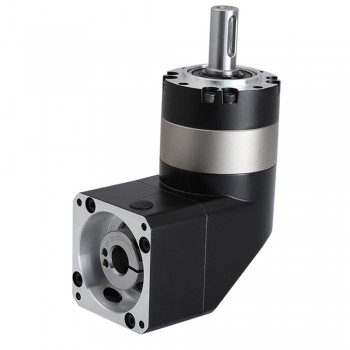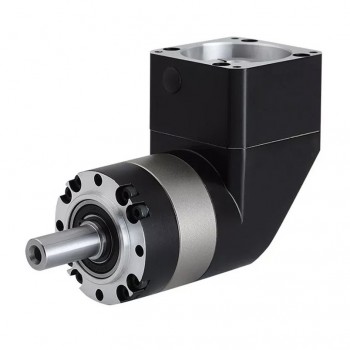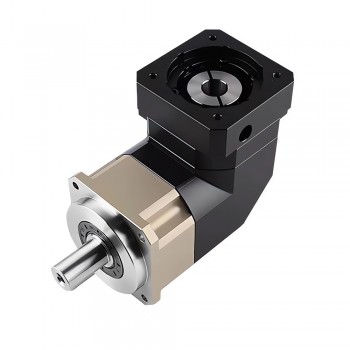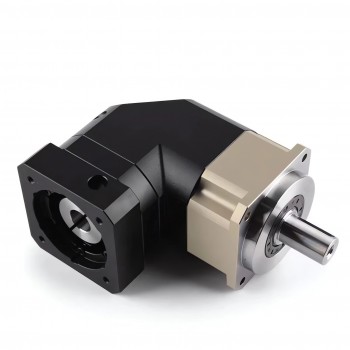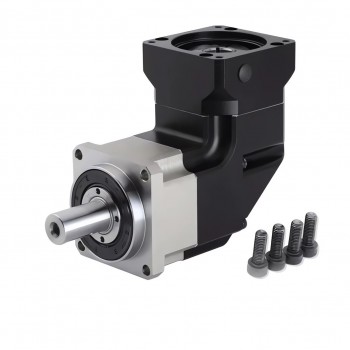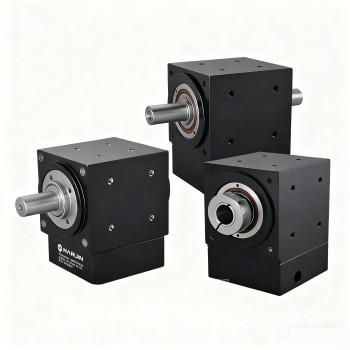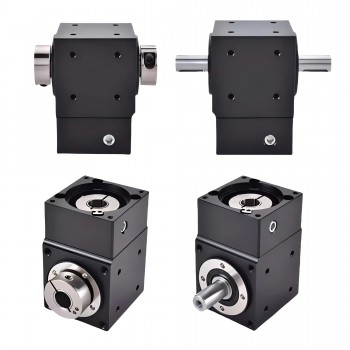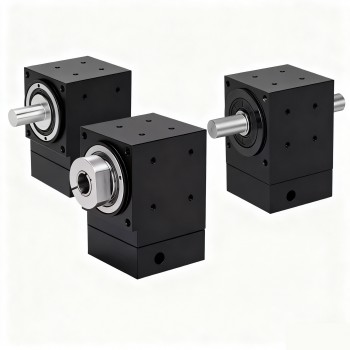






Right Angle Gearbox
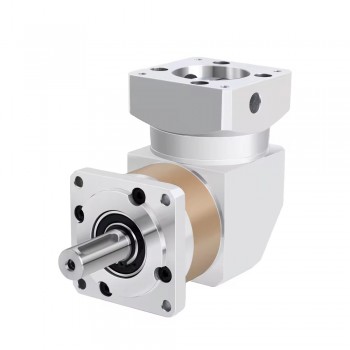
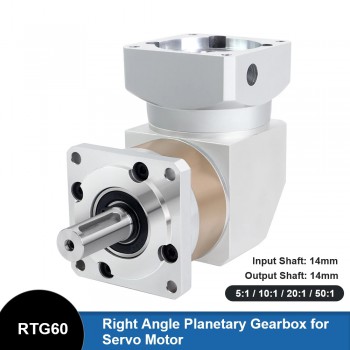
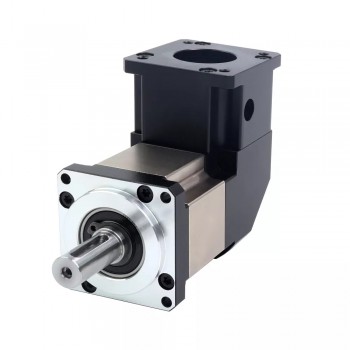
A right-angle gearbox (90-degree gearbox) transfers power between two shafts arranged at 90°. It is used when the motor cannot be placed in line with the driven shaft and a compact layout is needed. Output speed and torque change with the selected ratio, within the model's rated limits.
Common types and how they differ
- Worm: right‑angle drive with sliding contact; used in applications requiring compact packaging or holding behavior. Efficiency and heat depend strongly on ratio, lubrication, and load.
- Bevel: intersecting shafts with rolling tooth contact; typically used where higher efficiency and higher input speeds are needed, depending on series.
- Hypoid: offset bevel-style geometry; used when shaft offset helps the machine layout and when load ratings suit the application.
What to check before buying
Start from the application, not the catalog headline. Confirm required output torque, ratio, duty cycle, and input speed. Then verify mounting pattern, shaft sizes, allowable radial/axial loads, lubricant type, and operating temperature range. A gearbox that is correct on ratio can still fail early if overhung load, misalignment, or lubrication is ignored—use the datasheet and outline drawing for the final check.
Where it’s used
Common examples include conveyors, packaging lines, CNC subassemblies, agricultural mechanisms, and general automation. Installation matters: align shafts, support external loads with bearings or guides where required, and follow the lubrication and re-torque guidance to help maintain operation within rated limits.
Subcategories