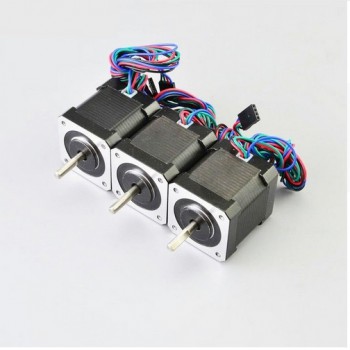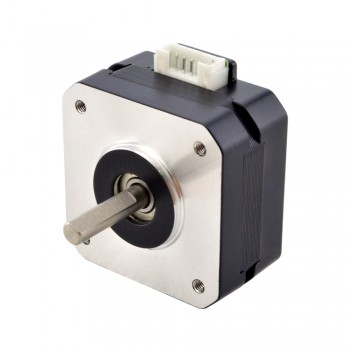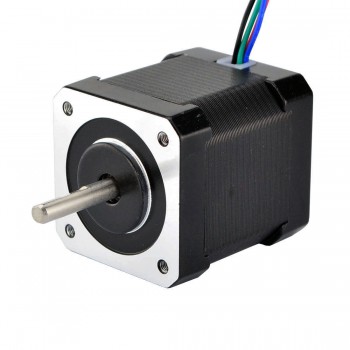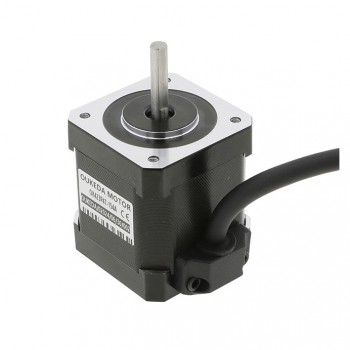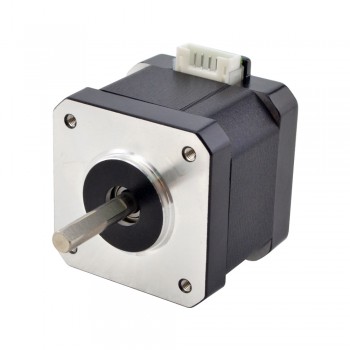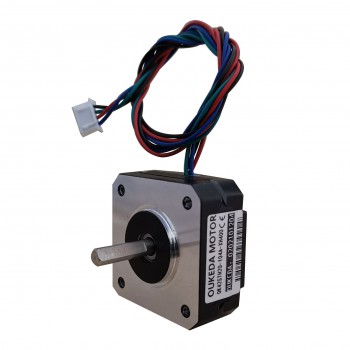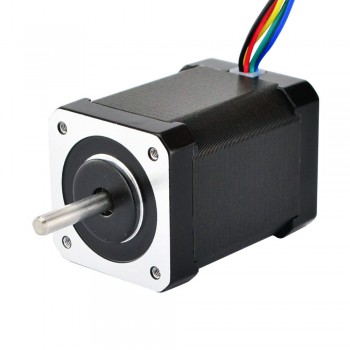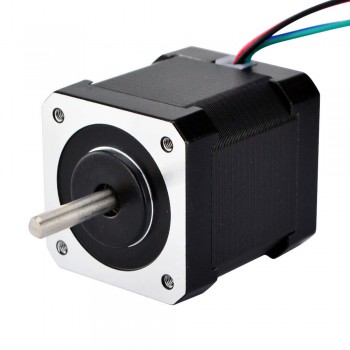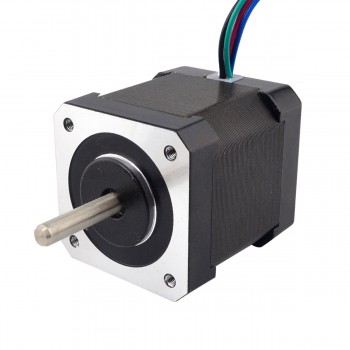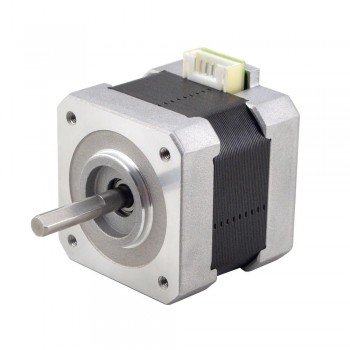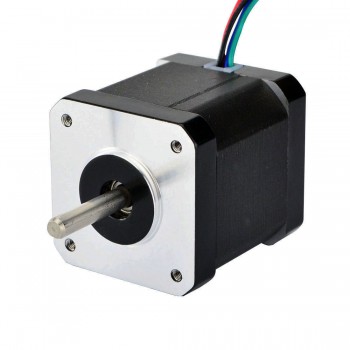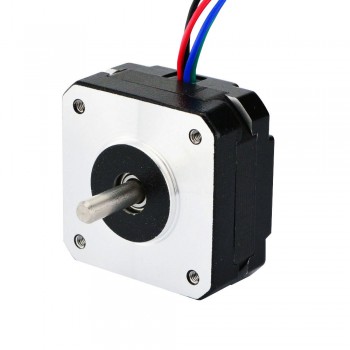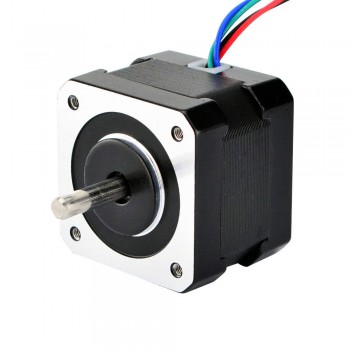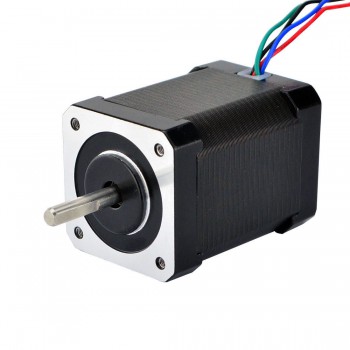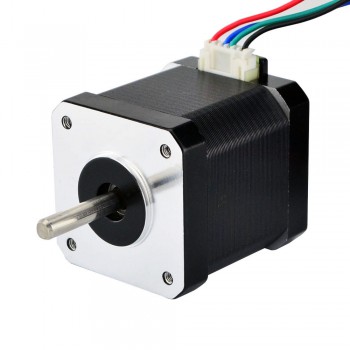





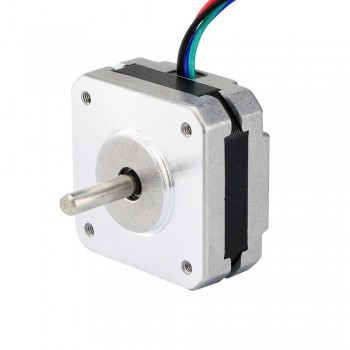
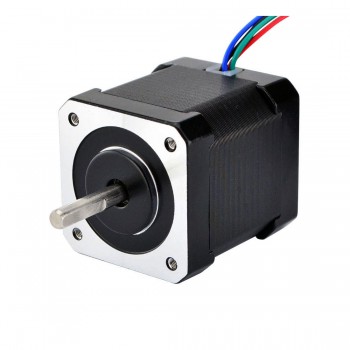

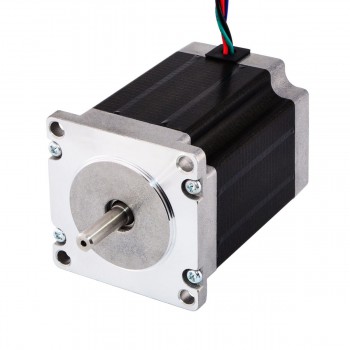
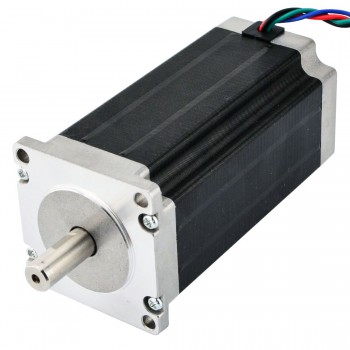
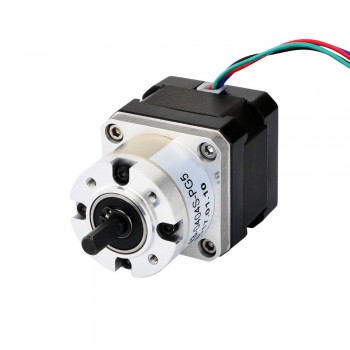
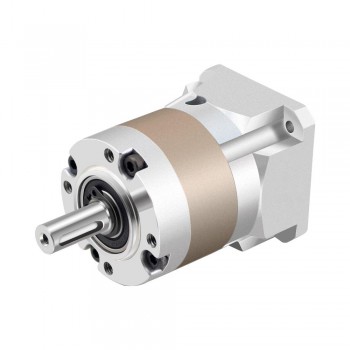
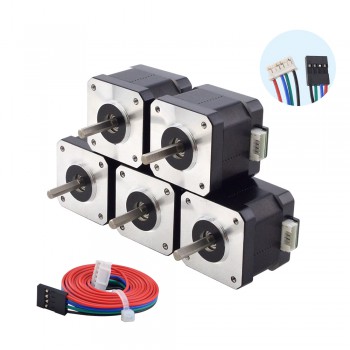

Nema 17 Stepper Motor
What is a NEMA 17 stepper motor?
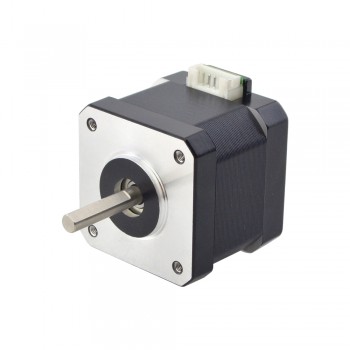
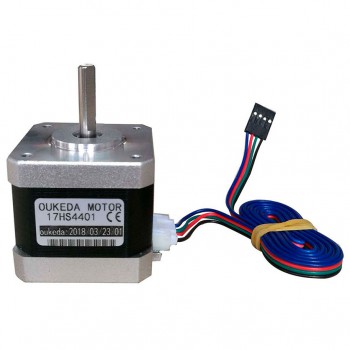
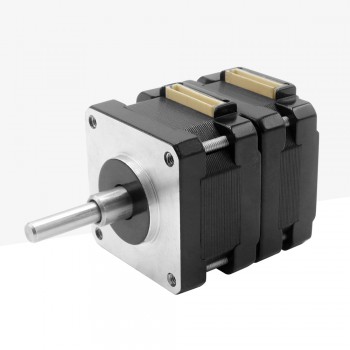
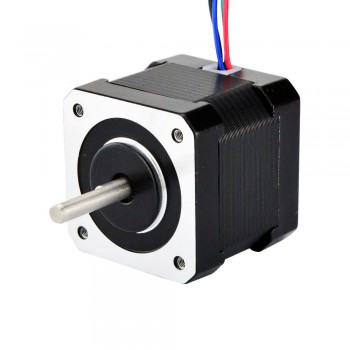
A NEMA 17 stepper motor follows the standard 1.7-inch square faceplate (NEMA frame size). That number tells you how it mounts—electrical performance depends on the specific model. It's used in compact machines where you need step-by-step, pulse-controlled motion.
How it works
Instead of continuous rotation, stepper motors move in discrete steps. Each pulse from the controller moves the shaft a fixed angle—commonly 1.8° per step (varies by model). Microstepping resolution comes from the driver. Many setups run open-loop without feedback, but that depends on your load and accuracy needs. Torque, speed, and temperature change with motor length, winding, and how hard you run it. The datasheet and torque–speed curve have the numbers that matter for selection.
What to check when picking one
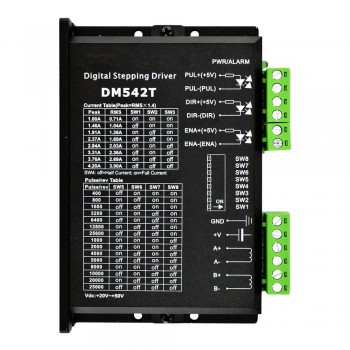
Start with holding torque—some models are around 20–80 N·cm depending on length and design. Then verify rated current/voltage and driver compatibility, step angle/resolution, motor length, mounting holes, shaft size, and where it'll live (dust, humidity, temperature, cooling). You'll find these in 3D printers, CNC machines, robotics, and automated positioning gear. Match the specs to your load and motion, and let the datasheet be the final word.